mirror of
https://gitverse.ru/anarchic/claude-code
synced 2026-04-28 04:29:50 +00:00

463 lines
No EOL
27 KiB
Markdown
463 lines
No EOL
27 KiB
Markdown
# Claude Code's Entire Source Code Got Leaked via a Sourcemap in npm, Let's Talk About It
|
|
|
|
> **PS:** I've also published this [breakdown on my blog](https://kuber.studio/blog/AI/Claude-Code's-Entire-Source-Code-Got-Leaked-via-a-Sourcemap-in-npm,-Let's-Talk-About-it) with a better reading experience and UX :)
|
|
|
|
> There's also a non-zero chance this repo might be taken down, so if you want to play around with it later, or archive it yourself, feel free to fork it & bookmark the external blog link !
|
|
|
|
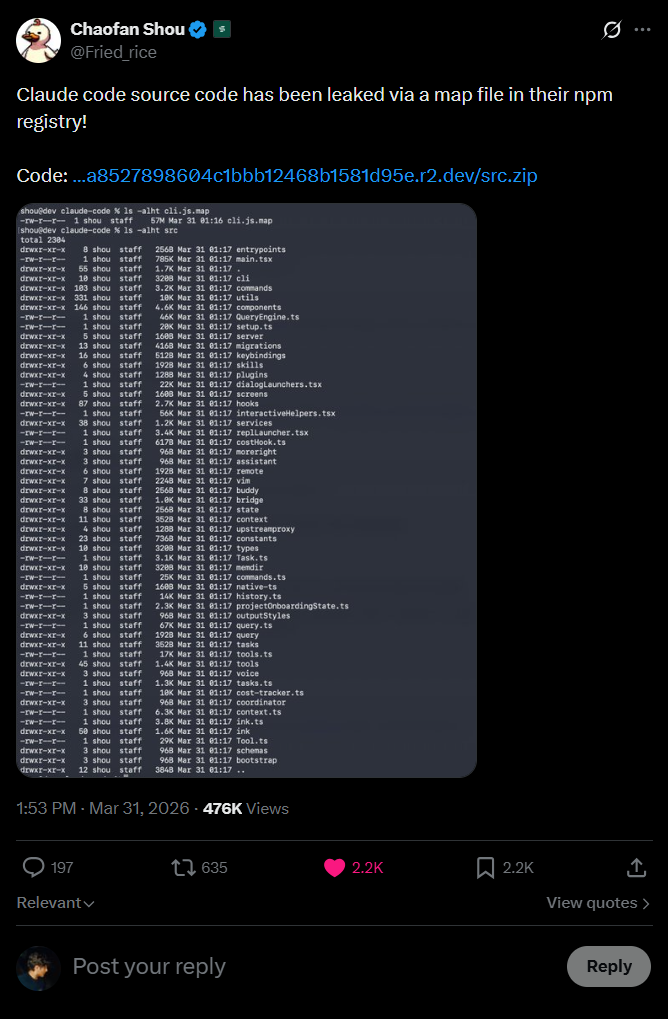
Earlier today (March 31st, 2026) - Chaofan Shou on X discovered something that Anthropic probably didn't want the world to see: the **entire source code** of Claude Code, Anthropic's official AI coding CLI, was sitting in plain sight on the npm registry via a sourcemap file bundled into the published package.
|
|
|
|
[](https://raw.githubusercontent.com/kuberwastaken/claude-code/main/public/leak-tweet.png)
|
|
|
|
This repository is a backup of that leaked source, and this README is a full breakdown of what's in it, how the leak happened and most importantly, the things we now know that were never meant to be public.
|
|
|
|
Let's get into it.
|
|
|
|
## How Did This Even Happen?
|
|
|
|
This is the part that honestly made me go "...really?"
|
|
|
|
When you publish a JavaScript/TypeScript package to npm, the build toolchain often generates **source map files** (`.map` files). These files are a bridge between the minified/bundled production code and the original source, they exist so that when something crashes in production the stack trace can point you to the *actual* line of code in the *original* file, not some unintelligible line 1, column 48293 of a minified blob.
|
|
|
|
But the fun part is **source maps contain the original source code**. The actual, literal, raw source code, embedded as strings inside a JSON file.
|
|
|
|
The structure of a `.map` file looks something like this:
|
|
|
|
```json
|
|
{
|
|
"version": 3,
|
|
"sources": ["../src/main.tsx", "../src/tools/BashTool.ts", "..."],
|
|
"sourcesContent": ["// The ENTIRE original source code of each file", "..."],
|
|
"mappings": "AAAA,SAAS,OAAO..."
|
|
}
|
|
```
|
|
|
|
That `sourcesContent` array? That's everything.
|
|
Every file. Every comment. Every internal constant. Every system prompt. All of it, sitting right there in a JSON file that npm happily serves to anyone who runs `npm pack` or even just browses the package contents.
|
|
|
|
This is not a novel attack vector. It's happened before and honestly it'll happen again.
|
|
|
|
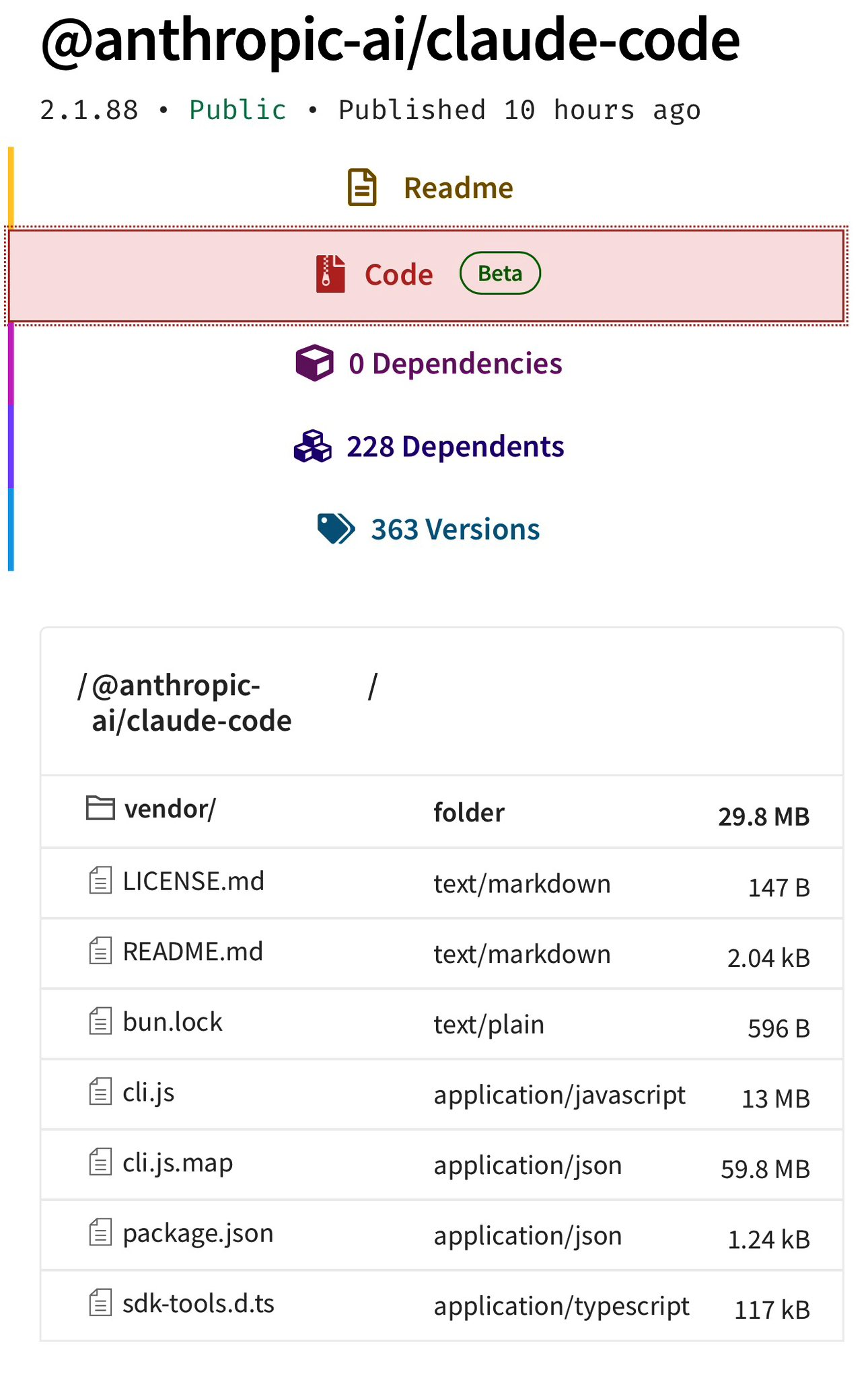
The mistake is almost always the same: someone forgets to add `*.map` to their `.npmignore` or doesn't configure their bundler to skip source map generation for production builds. With Bun's bundler (which Claude Code uses), source maps are generated by default unless you explicitly turn them off.
|
|
|
|
[](https://raw.githubusercontent.com/kuberwastaken/claude-code/main/public/claude-files.png)
|
|
|
|
The funniest part is, there's an entire system called ["Undercover Mode"](#undercover-mode--do-not-blow-your-cover) specifically designed to prevent Anthropic's internal information from leaking.
|
|
|
|
They built a whole subsystem to stop their AI from accidentally revealing internal codenames in git commits... and then shipped the entire source in a `.map` file, likely by Claude.
|
|
|
|
---
|
|
|
|
## What's Claude Under The Hood?
|
|
|
|
If you've been living under a rock, Claude Code is Anthropic's official CLI tool for coding with Claude and the most popular AI coding agent.
|
|
|
|
From the outside, it looks like a polished but relatively simple CLI.
|
|
|
|
From the inside, It's a **785KB [`main.tsx`](https://github.com/kuberwastaken/claude-code/blob/main/main.tsx)** entry point, a custom React terminal renderer, 40+ tools, a multi-agent orchestration system, a background memory consolidation engine called "dream," and much more
|
|
|
|
Enough yapping, here's some parts about the source code that are genuinely cool that I found after an afternoon deep dive:
|
|
|
|
---
|
|
|
|
## BUDDY - A Tamagotchi Inside Your Terminal
|
|
|
|
I am not making this up.
|
|
|
|
Claude Code has a full **Tamagotchi-style companion pet system** called "Buddy." A **deterministic gacha system** with species rarity, shiny variants, procedurally generated stats, and a soul description written by Claude on first hatch like OpenClaw.
|
|
|
|
The entire thing lives in [`buddy/`](https://github.com/kuberwastaken/claude-code/tree/main/buddy) and is gated behind the `BUDDY` compile-time feature flag.
|
|
|
|
### The Gacha System
|
|
|
|
Your buddy's species is determined by a **Mulberry32 PRNG**, a fast 32-bit pseudo-random number generator seeded from your `userId` hash with the salt `'friend-2026-401'`:
|
|
|
|
```typescript
|
|
// Mulberry32 PRNG - deterministic, reproducible per-user
|
|
function mulberry32(seed: number): () => number {
|
|
return function() {
|
|
seed |= 0; seed = seed + 0x6D2B79F5 | 0;
|
|
var t = Math.imul(seed ^ seed >>> 15, 1 | seed);
|
|
t = t + Math.imul(t ^ t >>> 7, 61 | t) ^ t;
|
|
return ((t ^ t >>> 14) >>> 0) / 4294967296;
|
|
}
|
|
}
|
|
```
|
|
|
|
Same user always gets the same buddy.
|
|
|
|
### 18 Species (Obfuscated in Code)
|
|
|
|
The species names are hidden via `String.fromCharCode()` arrays - Anthropic clearly didn't want these showing up in string searches. Decoded, the full species list is:
|
|
|
|
| Rarity | Species |
|
|
|--------|---------|
|
|
| **Common** (60%) | Pebblecrab, Dustbunny, Mossfrog, Twigling, Dewdrop, Puddlefish |
|
|
| **Uncommon** (25%) | Cloudferret, Gustowl, Bramblebear, Thornfox |
|
|
| **Rare** (10%) | Crystaldrake, Deepstag, Lavapup |
|
|
| **Epic** (4%) | Stormwyrm, Voidcat, Aetherling |
|
|
| **Legendary** (1%) | Cosmoshale, Nebulynx |
|
|
|
|
On top of that, there's a **1% shiny chance** completely independent of rarity. So a Shiny Legendary Nebulynx has a **0.01%** chance of being rolled. Dang.
|
|
|
|
### Stats, Eyes, Hats, and Soul
|
|
|
|
Each buddy gets procedurally generated:
|
|
- **5 stats**: `DEBUGGING`, `PATIENCE`, `CHAOS`, `WISDOM`, `SNARK` (0-100 each)
|
|
- **6 possible eye styles** and **8 hat options** (some gated by rarity)
|
|
- **A "soul"** as mentioned, the personality generated by Claude on first hatch, written in character
|
|
|
|
The sprites are rendered as **5-line-tall, 12-character-wide ASCII art** with multiple animation frames. There are idle animations, reaction animations, and they sit next to your input prompt.
|
|
|
|
### The Lore
|
|
|
|
The code references April 1-7, 2026 as a **teaser window** (so probably for easter?), with a full launch gated for May 2026. The companion has a system prompt that tells Claude:
|
|
|
|
```
|
|
A small {species} named {name} sits beside the user's input box and
|
|
occasionally comments in a speech bubble. You're not {name} - it's a
|
|
separate watcher.
|
|
```
|
|
|
|
So it's not just cosmetic - the buddy has its own personality and can respond when addressed by name. I really do hope they ship it.
|
|
|
|
---
|
|
|
|
## KAIROS - "Always-On Claude"
|
|
|
|
Inside [`assistant/`](https://github.com/kuberwastaken/claude-code/tree/main/assistant), there's an entire mode called **KAIROS** i.e. a persistent, always-running Claude assistant that doesn't wait for you to type. It watches, logs, and **proactively** acts on things it notices.
|
|
|
|
This is gated behind the `PROACTIVE` / `KAIROS` compile-time feature flags and is completely absent from external builds.
|
|
|
|
### How It Works
|
|
|
|
KAIROS maintains **append-only daily log files** - it writes observations, decisions, and actions throughout the day. On a regular interval, it receives `<tick>` prompts that let it decide whether to act proactively or stay quiet.
|
|
|
|
The system has a **15-second blocking budget**, any proactive action that would block the user's workflow for more than 15 seconds gets deferred. This is Claude trying to be helpful without being annoying.
|
|
|
|
### Brief Mode
|
|
|
|
When KAIROS is active, there's a special output mode called **Brief**, extremely concise responses designed for a persistent assistant that shouldn't flood your terminal. Think of it as the difference between a chatty friend and a professional assistant who only speaks when they have something valuable to say.
|
|
|
|
### Exclusive Tools
|
|
|
|
KAIROS gets tools that regular Claude Code doesn't have:
|
|
|
|
| Tool | What It Does |
|
|
|------|-------------|
|
|
| **SendUserFile** | Push files directly to the user (notifications, summaries) |
|
|
| **PushNotification** | Send push notifications to the user's device |
|
|
| **SubscribePR** | Subscribe to and monitor pull request activity |
|
|
|
|
---
|
|
|
|
## ULTRAPLAN - 30-Minute Remote Planning Sessions
|
|
|
|
Here's one that's wild from an infrastructure perspective.
|
|
|
|
**ULTRAPLAN** is a mode where Claude Code offloads a complex planning task to a **remote Cloud Container Runtime (CCR) session** running **Opus 4.6**, gives it up to **30 minutes** to think, and lets you approve the result from your browser.
|
|
|
|
The basic flow:
|
|
|
|
1. Claude Code identifies a task that needs deep planning
|
|
2. It spins up a remote CCR session via the `tengu_ultraplan_model` config
|
|
3. Your terminal shows a polling state - checking every **3 seconds** for the result
|
|
4. Meanwhile, a browser-based UI lets you watch the planning happen and approve/reject it
|
|
5. When approved, there's a special sentinel value `__ULTRAPLAN_TELEPORT_LOCAL__` that "teleports" the result back to your local terminal
|
|
|
|
---
|
|
|
|
## The "Dream" System - Claude Literally Dreams
|
|
|
|
Okay this is genuinely one of the coolest things in here.
|
|
|
|
Claude Code has a system called **autoDream** ([`services/autoDream/`](https://github.com/kuberwastaken/claude-code/tree/main/services/autoDream)) - a background memory consolidation engine that runs as a **forked subagent**. The naming is very intentional. It's Claude... dreaming.
|
|
|
|
This is extremely funny because [I had the same idea for LITMUS last week - OpenClaw subagents creatively having leisure time to find fun new papers](https://github.com/Kuberwastaken/litmus)
|
|
|
|
### The Three-Gate Trigger
|
|
|
|
The dream doesn't just run whenever it feels like it. It has a **three-gate trigger system**:
|
|
|
|
1. **Time gate**: 24 hours since last dream
|
|
2. **Session gate**: At least 5 sessions since last dream
|
|
3. **Lock gate**: Acquires a consolidation lock (prevents concurrent dreams)
|
|
|
|
All three must pass. This prevents both over-dreaming and under-dreaming.
|
|
|
|
### The Four Phases
|
|
|
|
When it runs, the dream follows four strict phases from the prompt in [`consolidationPrompt.ts`](https://github.com/kuberwastaken/claude-code/blob/main/services/autoDream/consolidationPrompt.ts):
|
|
|
|
**Phase 1 - Orient**: `ls` the memory directory, read `MEMORY.md`, skim existing topic files to improve.
|
|
|
|
**Phase 2 - Gather Recent Signal**: Find new information worth persisting. Sources in priority: daily logs → drifted memories → transcript search.
|
|
|
|
**Phase 3 - Consolidate**: Write or update memory files. Convert relative dates to absolute. Delete contradicted facts.
|
|
|
|
**Phase 4 - Prune and Index**: Keep `MEMORY.md` under 200 lines AND ~25KB. Remove stale pointers. Resolve contradictions.
|
|
|
|
The prompt literally says:
|
|
|
|
> *"You are performing a dream - a reflective pass over your memory files. Synthesize what you've learned recently into durable, well-organized memories so that future sessions can orient quickly."*
|
|
|
|
The dream subagent gets **read-only bash** - it can look at your project but not modify anything. It's purely a memory consolidation pass.
|
|
|
|
---
|
|
|
|
## Undercover Mode - "Do Not Blow Your Cover"
|
|
|
|
|
|
This one is fascinating from a corporate strategy perspective.
|
|
|
|
Anthropic employees (identified by `USER_TYPE === 'ant'`) use Claude Code on public/open-source repositories. **Undercover Mode** ([`utils/undercover.ts`](https://github.com/kuberwastaken/claude-code/blob/main/utils/undercover.ts)) prevents the AI from accidentally revealing internal information in commits and PRs.
|
|
|
|
When active, it injects this into the system prompt:
|
|
|
|
```
|
|
## UNDERCOVER MODE - CRITICAL
|
|
|
|
You are operating UNDERCOVER in a PUBLIC/OPEN-SOURCE repository. Your commit
|
|
messages, PR titles, and PR bodies MUST NOT contain ANY Anthropic-internal
|
|
information. Do not blow your cover.
|
|
|
|
NEVER include in commit messages or PR descriptions:
|
|
- Internal model codenames (animal names like Capybara, Tengu, etc.)
|
|
- Unreleased model version numbers (e.g., opus-4-7, sonnet-4-8)
|
|
- Internal repo or project names
|
|
- Internal tooling, Slack channels, or short links (e.g., go/cc, #claude-code-…)
|
|
- The phrase "Claude Code" or any mention that you are an AI
|
|
- Co-Authored-By lines or any other attribution
|
|
```
|
|
|
|
The activation logic:
|
|
- `CLAUDE_CODE_UNDERCOVER=1` forces it ON (even in internal repos)
|
|
- Otherwise it's **automatic**: active UNLESS the repo remote matches an internal allowlist
|
|
- There is **NO force-OFF** - *"if we're not confident we're in an internal repo, we stay undercover."*
|
|
|
|
So this confirms:
|
|
1. **Anthropic employees actively use Claude Code to contribute to open-source** - and the AI is told to hide that it's an AI
|
|
2. **Internal model codenames are animal names** - Capybara, Tengu, etc.
|
|
3. **"Tengu"** appears hundreds of times as a prefix for feature flags and analytics events - it's almost certainly **Claude Code's internal project codename**
|
|
|
|
All of this is dead-code-eliminated from external builds. But source maps don't care about dead code elimination.
|
|
|
|
Makes me wonder how much are they internally causing havoc to open source repos
|
|
|
|
---
|
|
|
|
## Multi-Agent Orchestration - "Coordinator Mode"
|
|
|
|
|
|
Claude Code has a full **multi-agent orchestration system** in [`coordinator/`](https://github.com/kuberwastaken/claude-code/tree/main/coordinator), activated via `CLAUDE_CODE_COORDINATOR_MODE=1`.
|
|
|
|
When enabled, Claude Code transforms from a single agent into a **coordinator** that spawns, directs, and manages multiple worker agents in parallel. The coordinator system prompt in [`coordinatorMode.ts`](https://github.com/kuberwastaken/claude-code/blob/main/coordinator/coordinatorMode.ts) is a masterclass in multi-agent design:
|
|
|
|
| Phase | Who | Purpose |
|
|
|-------|-----|---------|
|
|
| **Research** | Workers (parallel) | Investigate codebase, find files, understand problem |
|
|
| **Synthesis** | **Coordinator** | Read findings, understand the problem, craft specs |
|
|
| **Implementation** | Workers | Make targeted changes per spec, commit |
|
|
| **Verification** | Workers | Test changes work |
|
|
|
|
The prompt **explicitly** teaches parallelism:
|
|
|
|
> *"Parallelism is your superpower. Workers are async. Launch independent workers concurrently whenever possible - don't serialize work that can run simultaneously."*
|
|
|
|
Workers communicate via `<task-notification>` XML messages. There's a shared **scratchpad directory** (gated behind `tengu_scratch`) for cross-worker durable knowledge sharing. And the prompt has this gem banning lazy delegation:
|
|
|
|
> *Do NOT say "based on your findings" - read the actual findings and specify exactly what to do.*
|
|
|
|
The system also includes **Agent Teams/Swarm** capabilities (`tengu_amber_flint` feature gate) with in-process teammates using `AsyncLocalStorage` for context isolation, process-based teammates using tmux/iTerm2 panes, team memory synchronization, and color assignments for visual distinction.
|
|
|
|
---
|
|
|
|
## Fast Mode is Internally Called "Penguin Mode"
|
|
|
|
Yeah, they really called it Penguin Mode. The API endpoint in [`utils/fastMode.ts`](https://github.com/kuberwastaken/claude-code/blob/main/utils/fastMode.ts) is literally:
|
|
|
|
```typescript
|
|
const endpoint = `${getOauthConfig().BASE_API_URL}/api/claude_code_penguin_mode`
|
|
```
|
|
|
|
The config key is `penguinModeOrgEnabled`. The kill-switch is `tengu_penguins_off`. The analytics event on failure is `tengu_org_penguin_mode_fetch_failed`. Penguins all the way down.
|
|
|
|
---
|
|
|
|
## The System Prompt Architecture
|
|
|
|
The system prompt isn't a single string like most apps have - it's built from **modular, cached sections** composed at runtime in [`constants/`](https://github.com/kuberwastaken/claude-code/tree/main/constants).
|
|
|
|
The architecture uses a `SYSTEM_PROMPT_DYNAMIC_BOUNDARY` marker that splits the prompt into:
|
|
- **Static sections** - cacheable across organizations (things that don't change per user)
|
|
- **Dynamic sections** - user/session-specific content that breaks cache when changed
|
|
|
|
There's a function called `DANGEROUS_uncachedSystemPromptSection()` for volatile sections you explicitly want to break cache. The naming convention alone tells you someone learned this lesson the hard way.
|
|
|
|
### The Cyber Risk Instruction
|
|
|
|
One particularly interesting section is the `CYBER_RISK_INSTRUCTION` in [`constants/cyberRiskInstruction.ts`](https://github.com/kuberwastaken/claude-code/blob/main/constants/cyberRiskInstruction.ts), which has a massive warning header:
|
|
|
|
```
|
|
IMPORTANT: DO NOT MODIFY THIS INSTRUCTION WITHOUT SAFEGUARDS TEAM REVIEW
|
|
This instruction is owned by the Safeguards team (David Forsythe, Kyla Guru)
|
|
```
|
|
|
|
So now we know exactly who at Anthropic owns the security boundary decisions and that it's governed by named individuals on a specific team. The instruction itself draws clear lines: authorized security testing is fine, destructive techniques and supply chain compromise are not.
|
|
|
|
---
|
|
|
|
## The Full Tool Registry - 40+ Tools
|
|
|
|
Claude Code's tool system lives in [`tools/`](https://github.com/kuberwastaken/claude-code/tree/main/tools).Here's the complete list:
|
|
|
|
| Tool | What It Does |
|
|
|------|-------------|
|
|
| **AgentTool** | Spawn child agents/subagents |
|
|
| **BashTool** / **PowerShellTool** | Shell execution (with optional sandboxing) |
|
|
| **FileReadTool** / **FileEditTool** / **FileWriteTool** | File operations |
|
|
| **GlobTool** / **GrepTool** | File search (uses native `bfs`/`ugrep` when available) |
|
|
| **WebFetchTool** / **WebSearchTool** / **WebBrowserTool** | Web access |
|
|
| **NotebookEditTool** | Jupyter notebook editing |
|
|
| **SkillTool** | Invoke user-defined skills |
|
|
| **REPLTool** | Interactive VM shell (bare mode) |
|
|
| **LSPTool** | Language Server Protocol communication |
|
|
| **AskUserQuestionTool** | Prompt user for input |
|
|
| **EnterPlanModeTool** / **ExitPlanModeV2Tool** | Plan mode control |
|
|
| **BriefTool** | Upload/summarize files to claude.ai |
|
|
| **SendMessageTool** / **TeamCreateTool** / **TeamDeleteTool** | Agent swarm management |
|
|
| **TaskCreateTool** / **TaskGetTool** / **TaskListTool** / **TaskUpdateTool** / **TaskOutputTool** / **TaskStopTool** | Background task management |
|
|
| **TodoWriteTool** | Write todos (legacy) |
|
|
| **ListMcpResourcesTool** / **ReadMcpResourceTool** | MCP resource access |
|
|
| **SleepTool** | Async delays |
|
|
| **SnipTool** | History snippet extraction |
|
|
| **ToolSearchTool** | Tool discovery |
|
|
| **ListPeersTool** | List peer agents (UDS inbox) |
|
|
| **MonitorTool** | Monitor MCP servers |
|
|
| **EnterWorktreeTool** / **ExitWorktreeTool** | Git worktree management |
|
|
| **ScheduleCronTool** | Schedule cron jobs |
|
|
| **RemoteTriggerTool** | Trigger remote agents |
|
|
| **WorkflowTool** | Execute workflow scripts |
|
|
| **ConfigTool** | Modify settings (**internal only**) |
|
|
| **TungstenTool** | Advanced features (**internal only**) |
|
|
| **SendUserFile** / **PushNotification** / **SubscribePR** | KAIROS-exclusive tools |
|
|
|
|
Tools are registered via `getAllBaseTools()` and filtered by feature gates, user type, environment flags, and permission deny rules. There's a **tool schema cache** ([`toolSchemaCache.ts`](https://github.com/kuberwastaken/claude-code/blob/main/tools/toolSchemaCache.ts)) that caches JSON schemas for prompt efficiency.
|
|
|
|
---
|
|
|
|
## The Permission and Security System
|
|
|
|
Claude Code's permission system in [`tools/permissions/`](https://github.com/kuberwastaken/claude-code/tree/main/tools/permissions) is far more sophisticated than "allow/deny":
|
|
|
|
**Permission Modes**: `default` (interactive prompts), `auto` (ML-based auto-approval via transcript classifier), `bypass` (skip checks), `yolo` (deny all - ironically named)
|
|
|
|
**Risk Classification**: Every tool action is classified as **LOW**, **MEDIUM**, or **HIGH** risk. There's a **YOLO classifier** - a fast ML-based permission decision system that decides automatically.
|
|
|
|
**Protected Files**: `.gitconfig`, `.bashrc`, `.zshrc`, `.mcp.json`, `.claude.json` and others are guarded from automatic editing.
|
|
|
|
**Path Traversal Prevention**: URL-encoded traversals, Unicode normalization attacks, backslash injection, case-insensitive path manipulation - all handled.
|
|
|
|
**Permission Explainer**: A separate LLM call explains tool risks to the user before they approve. When Claude says "this command will modify your git config" - that explanation is itself generated by Claude.
|
|
|
|
---
|
|
|
|
## Hidden Beta Headers and Unreleased API Features
|
|
|
|
The [`constants/betas.ts`](https://github.com/kuberwastaken/claude-code/blob/main/constants/betas.ts) file reveals every beta feature Claude Code negotiates with the API:
|
|
|
|
```typescript
|
|
'interleaved-thinking-2025-05-14' // Extended thinking
|
|
'context-1m-2025-08-07' // 1M token context window
|
|
'structured-outputs-2025-12-15' // Structured output format
|
|
'web-search-2025-03-05' // Web search
|
|
'advanced-tool-use-2025-11-20' // Advanced tool use
|
|
'effort-2025-11-24' // Effort level control
|
|
'task-budgets-2026-03-13' // Task budget management
|
|
'prompt-caching-scope-2026-01-05' // Prompt cache scoping
|
|
'fast-mode-2026-02-01' // Fast mode (Penguin)
|
|
'redact-thinking-2026-02-12' // Redacted thinking
|
|
'token-efficient-tools-2026-03-28' // Token-efficient tool schemas
|
|
'afk-mode-2026-01-31' // AFK mode
|
|
'cli-internal-2026-02-09' // Internal-only (ant)
|
|
'advisor-tool-2026-03-01' // Advisor tool
|
|
'summarize-connector-text-2026-03-13' // Connector text summarization
|
|
```
|
|
|
|
`redact-thinking`, `afk-mode`, and `advisor-tool` are also not released.
|
|
|
|
---
|
|
|
|
## Feature Gating - Internal vs. External Builds
|
|
|
|
This is one of the most architecturally interesting parts of the codebase.
|
|
|
|
Claude Code uses **compile-time feature flags** via Bun's `feature()` function from `bun:bundle`. The bundler **constant-folds** these and **dead-code-eliminates** the gated branches from external builds. The complete list of known flags:
|
|
|
|
| Flag | What It Gates |
|
|
|------|--------------|
|
|
| `PROACTIVE` / `KAIROS` | Always-on assistant mode |
|
|
| `KAIROS_BRIEF` | Brief command |
|
|
| `BRIDGE_MODE` | Remote control via claude.ai |
|
|
| `DAEMON` | Background daemon mode |
|
|
| `VOICE_MODE` | Voice input |
|
|
| `WORKFLOW_SCRIPTS` | Workflow automation |
|
|
| `COORDINATOR_MODE` | Multi-agent orchestration |
|
|
| `TRANSCRIPT_CLASSIFIER` | AFK mode (ML auto-approval) |
|
|
| `BUDDY` | Companion pet system |
|
|
| `NATIVE_CLIENT_ATTESTATION` | Client attestation |
|
|
| `HISTORY_SNIP` | History snipping |
|
|
| `EXPERIMENTAL_SKILL_SEARCH` | Skill discovery |
|
|
|
|
Additionally, `USER_TYPE === 'ant'` gates Anthropic-internal features: staging API access (`claude-ai.staging.ant.dev`), internal beta headers, Undercover mode, the `/security-review` command, `ConfigTool`, `TungstenTool`, and debug prompt dumping to `~/.config/claude/dump-prompts/`.
|
|
|
|
**GrowthBook** handles runtime feature gating with aggressively cached values. Feature flags prefixed with `tengu_` control everything from fast mode to memory consolidation. Many checks use `getFeatureValue_CACHED_MAY_BE_STALE()` to avoid blocking the main loop - stale data is considered acceptable for feature gates.
|
|
|
|
---
|
|
|
|
## Other Notable Findings
|
|
|
|
### The Upstream Proxy
|
|
The [`upstreamproxy/`](https://github.com/kuberwastaken/claude-code/tree/main/upstreamproxy) directory contains a container-aware proxy relay that uses **`prctl(PR_SET_DUMPABLE, 0)`** to prevent same-UID ptrace of heap memory. It reads session tokens from `/run/ccr/session_token` in CCR containers, downloads CA certificates, and starts a local CONNECT→WebSocket relay. Anthropic API, GitHub, npmjs.org, and pypi.org are explicitly excluded from proxying.
|
|
|
|
### Bridge Mode
|
|
A JWT-authenticated bridge system in [`bridge/`](https://github.com/kuberwastaken/claude-code/tree/main/bridge) for integrating with claude.ai. Supports work modes: `'single-session'` | `'worktree'` | `'same-dir'`. Includes trusted device tokens for elevated security tiers.
|
|
|
|
### Model Codenames in Migrations
|
|
The [`migrations/`](https://github.com/kuberwastaken/claude-code/tree/main/migrations) directory reveals the internal codename history:
|
|
- `migrateFennecToOpus` - **"Fennec"** (the fox) was an Opus codename
|
|
- `migrateSonnet1mToSonnet45` - Sonnet with 1M context became Sonnet 4.5
|
|
- `migrateSonnet45ToSonnet46` - Sonnet 4.5 → Sonnet 4.6
|
|
- `resetProToOpusDefault` - Pro users were reset to Opus at some point
|
|
|
|
### Attribution Header
|
|
Every API request includes:
|
|
```
|
|
x-anthropic-billing-header: cc_version={VERSION}.{FINGERPRINT};
|
|
cc_entrypoint={ENTRYPOINT}; cch={ATTESTATION_PLACEHOLDER}; cc_workload={WORKLOAD};
|
|
```
|
|
The `NATIVE_CLIENT_ATTESTATION` feature lets Bun's HTTP stack overwrite the `cch=00000` placeholder with a computed hash - essentially a client authenticity check so Anthropic can verify the request came from a real Claude Code install.
|
|
|
|
### Computer Use - "Chicago"
|
|
Claude Code includes a full Computer Use implementation, internally codenamed **"Chicago"**, built on `@ant/computer-use-mcp`. It provides screenshot capture, click/keyboard input, and coordinate transformation. Gated to Max/Pro subscriptions (with an ant bypass for internal users).
|
|
|
|
### Pricing
|
|
For anyone wondering - all pricing in [`utils/modelCost.ts`](https://github.com/kuberwastaken/claude-code/blob/main/utils/modelCost.ts) matches [Anthropic's public pricing](https://docs.anthropic.com/en/docs/about-claude/models) exactly. Nothing newsworthy there.
|
|
|
|
---
|
|
|
|
## Final Thoughts
|
|
|
|
This is, without exaggeration, one of the most comprehensive looks we've ever gotten at how *the* production AI coding assistant works under the hood. Through the actual source code.
|
|
|
|
A few things stand out:
|
|
|
|
**The engineering is genuinely impressive.** This isn't a weekend project wrapped in a CLI. The multi-agent coordination, the dream system, the three-gate trigger architecture, the compile-time feature elimination - these are deeply considered systems.
|
|
|
|
**There's a LOT more coming.** KAIROS (always-on Claude), ULTRAPLAN (30-minute remote planning), the Buddy companion, coordinator mode, agent swarms, workflow scripts - the codebase is significantly ahead of the public release. Most of these are feature-gated and invisible in external builds.
|
|
|
|
**The internal culture shows.** Animal codenames (Tengu, Fennec, Capybara), playful feature names (Penguin Mode, Dream System), a Tamagotchi pet system with gacha mechanics. Some people at Anthropic is having fun.
|
|
|
|
If there's one takeaway this has, it's that security is hard. But `.npmignore` is harder, apparently :P
|
|
|
|
---
|
|
|
|
A writeup by [Kuber Mehta](https://kuber.studio/) |